Key Takeaways
Quick answer: Google ranking factors are the signals and automated systems Google uses to decide which pages appear for a search and in what order. In 2026, search intent match and helpful, people-first content matter most, supported by trust signals, quality links, and technical health.
- Google ranking factors have no official fixed list. Google says its automated systems weigh many signals across hundreds of billions of pages. Most systems score individual pages, while site-wide signals help Google understand them.
- Search intent comes first. Every query is informational, navigational, commercial, or transactional, and a page that does not match the intent of the query will struggle however well it is written.
- Helpful, people-first content is the core of ranking. Google rewards original information, complete coverage of the topic, and real value compared with other pages. It does not set a preferred word count or keyword density.
- E-E-A-T is a quality framework, not a single score. Experience, expertise, authoritativeness, and trust apply together, and trust is the most important part, especially for health, finance, and legal topics.
- Links still count, but quality beats volume. PageRank remains one of Google’s link analysis systems, and Google’s spam policies treat manipulative link schemes as violations.
- Technical health decides whether your content can compete. Pages must be crawlable, indexable, mobile-friendly, and meet Core Web Vitals targets: LCP within 2.5 seconds, INP under 200 milliseconds, and CLS below 0.1.
- Google’s 2026 core updates were not penalties. The March core update ran from March 27 to April 8 and the May core update from May 21 to June 2, and both reassessed content quality across the index. Spam updates in March, June, and August targeted policy violations instead.
- AI answers build on the same foundation. Pages that appear in Google’s AI features still need to be crawled, indexed, and judged useful, and clear direct answers make them easier to cite.
Google ranking factors are the signals and systems Google uses to decide which pages appear for a search and in what order. There is no official list of 200 factors to tick off. Google says its automated systems look at many factors and signals across hundreds of billions of pages to surface useful results.
That makes the question more practical than it sounds. Instead of chasing a checklist, you need to know which signals carry real weight, which ones are noise, and how the 2026 updates changed the picture. If you are new to the fundamentals, start with what SEO is and how it works, then come back here.
How does Google rank websites?
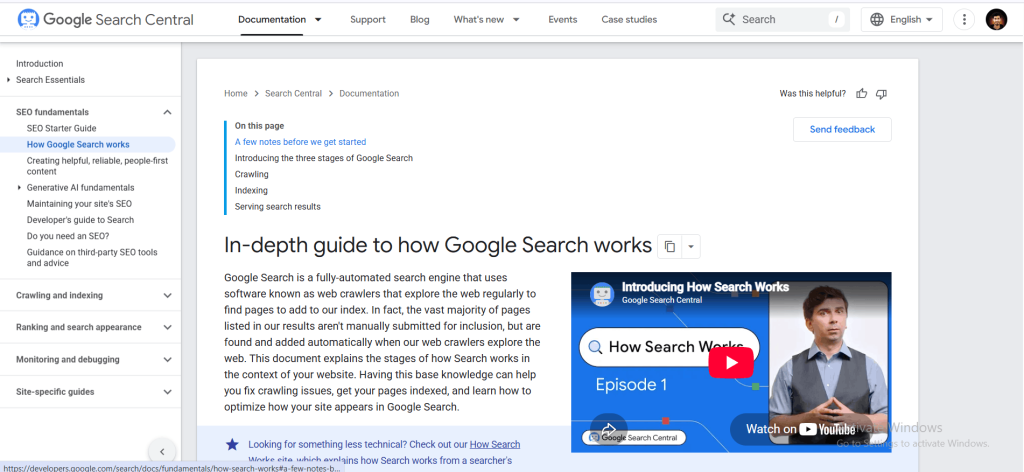
Google works in three stages. It crawls pages by following links, indexes what it finds, and then ranks indexed pages when someone searches.
Ranking is where the factors come in. According to Google’s own guide to its ranking systems, most systems work at the page level, while site-wide signals help Google understand individual pages. A strong site does not guarantee every page ranks, and a weak section does not automatically sink the rest.
Several named systems do the heavy lifting: BERT and neural matching for understanding language, PageRank for link analysis, and systems for freshness, original content, and spam detection. You do not need to memorize them. You need to know that they all serve one goal: matching a page to what a searcher actually wants.
What affects SEO rankings most: search intent
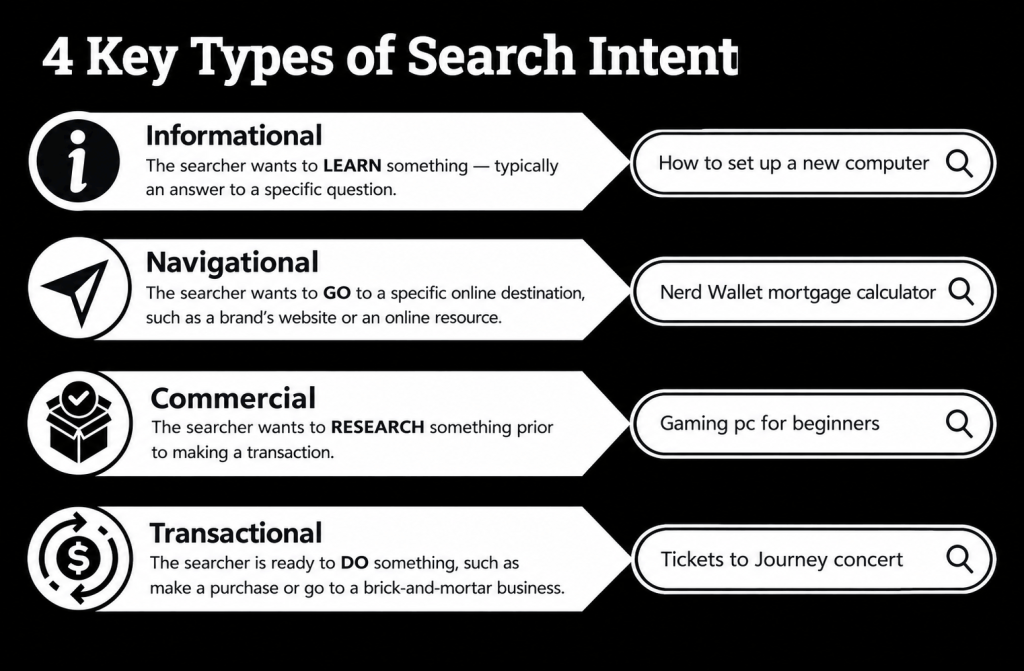
Search intent is the first filter. A page can be well written, fast, and well linked, and still fail because it answers the wrong question.
Google reads intent from the query and from what people click. Most queries fall into four groups:
| Intent type | What the searcher wants | Example query |
|---|---|---|
| Informational | To learn something | how does google rank websites |
| Navigational | To reach a specific site | google search console login |
| Commercial | To compare before buying | best seo tools for agencies |
| Transactional | To act now | hire seo consultant |
The fastest way to check intent is to search your keyword and read page one. Look at the format (guides, lists, product pages), the angle, and the depth. If the top ten are all step-by-step guides and you publish a sales page, you are fighting the results instead of matching them. Our keyword research guide shows how to sort keywords by intent before you write anything.
Local intent works the same way. A search like “dentist near me” triggers map results, so a blog post will not compete there. In that case, local SEO is the right lever.
Helpful, people-first content
Google states that its ranking systems are designed to prioritize helpful, reliable information created for people rather than to manipulate rankings. Its helpful content guidance lists self-assessment questions, and a few of them matter more than the rest:
- Does the page offer original information, research, or analysis?
- Does it describe the topic completely, beyond the obvious?
- Does it add real value compared with other pages in the results?
Notice what is missing. Google does not name a word count, a keyword density, or a heading formula. Length follows the topic, not the other way around.
In practice, this means writing from experience. Add your own data, screenshots, test results, and mistakes. A summary of the top ten results adds nothing they do not already have. If you want a repeatable way to plan this, build it into your SEO content strategy so every page has a clear purpose and a clear reader.
Clean on-page SEO supports this work: a descriptive title, a logical heading structure, and clear answers near the top help both readers and crawlers understand the page.
E-E-A-T and trust signals
E-E-A-T stands for experience, expertise, authoritativeness, and trustworthiness. It comes from Google’s quality rater guidelines and is not a single score you can measure. Think of it as the standard Google’s systems try to reward, with trust at the center.
For your own site, that means real author names and bios, cited sources, transparent contact details, accurate claims, and first-hand proof. This matters most for health, finance, and legal topics, where bad information can hurt people. Our full breakdown of E-E-A-T for SEO covers how to show these signals page by page.
Backlinks and brand authority
Links remain part of how Google understands pages. PageRank is still listed among Google’s link analysis systems, so links from relevant, trusted sites continue to matter.
The difference in 2026 is quality over volume. Google’s spam policies treat manipulative link schemes as spam, and SpamBrain, Google’s spam-detection system, is built to catch them. A handful of editorial links from respected sites in your field will do more than a bulk package of directory links.
Earn links by publishing things worth citing: original data, tools, and clear explanations. If you want a safe framework, see these link building strategies that avoid the tactics Google penalizes.
Technical health and page experience
Technical SEO does not win rankings by itself, but it decides whether your content can compete at all. If Google cannot crawl or index a page, nothing else matters.
The basics to keep in order:
- Pages are crawlable and not blocked by robots.txt or stray noindex tags.
- The mobile version contains the full content, since Google indexes the mobile version of pages.
- The site runs on HTTPS and has clean internal linking.
- Canonical tags and redirects point where you intend.
Speed and stability are measured through Core Web Vitals. Google’s targets are Largest Contentful Paint within 2.5 seconds, Interaction to Next Paint under 200 milliseconds, and Cumulative Layout Shift below 0.1. Good scores will not rescue weak content, but a slow or jumpy page can hold back a strong one. Our Core Web Vitals guide walks through fixes for each metric, and the technical SEO guide covers crawling and indexing in more depth.
Structured data also helps Google interpret your content. It is not a direct ranking boost, but schema markup can make pages eligible for richer results and clearer entity signals.
Google algorithm update 2026: what happened so far
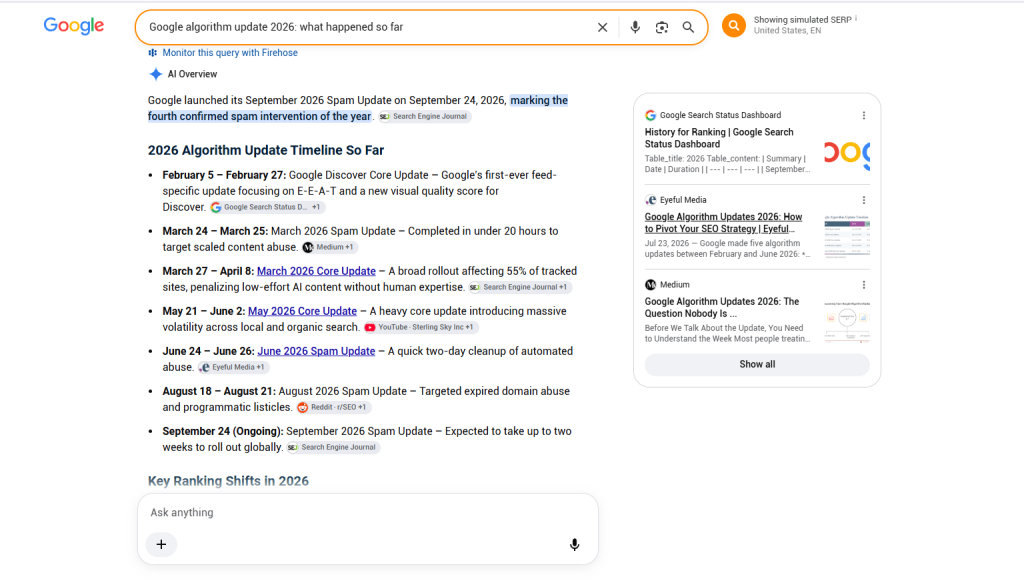
Google confirmed several ranking updates this year. Here is the verified timeline:
- February 5 to 27: the February 2026 Discover core update, the first time Google labeled a core update as Discover-only.
- March 24 to 25: the March 2026 spam update, which finished in under 20 hours.
- March 27 to April 8: the March 2026 core update, a 12-day rollout that Google called a regular update with no companion blog post. Search Engine Journal covered the completion.
- May 21 to June 2: the May 2026 core update. Search Engine Roundtable tracked the rollout.
- June 24 to 26: the June 2026 spam update.
- August 18 to 21: the August 2026 spam update, the third confirmed spam update of the year.
A few lessons stand out.
Core updates are not penalties. They reassess quality across the whole index. Google did not share new guidance specific to the May update, and its standing advice is that there are no specific actions you can take to recover from a drop. Pages can fall because other pages were judged more useful, not because yours got worse.
Search Engine Land
Spam updates are different. They target policy violations such as link spam, scaled low-value content, and cloaking. If you follow Google’s spam policies, these updates rarely touch you.
Do not react to chatter. Only the Google Search Status Dashboard confirms updates. Before you change anything after a traffic dip, compare Search Console data against confirmed dates and rule out technical problems first.
Where AI Overviews and AI Mode fit
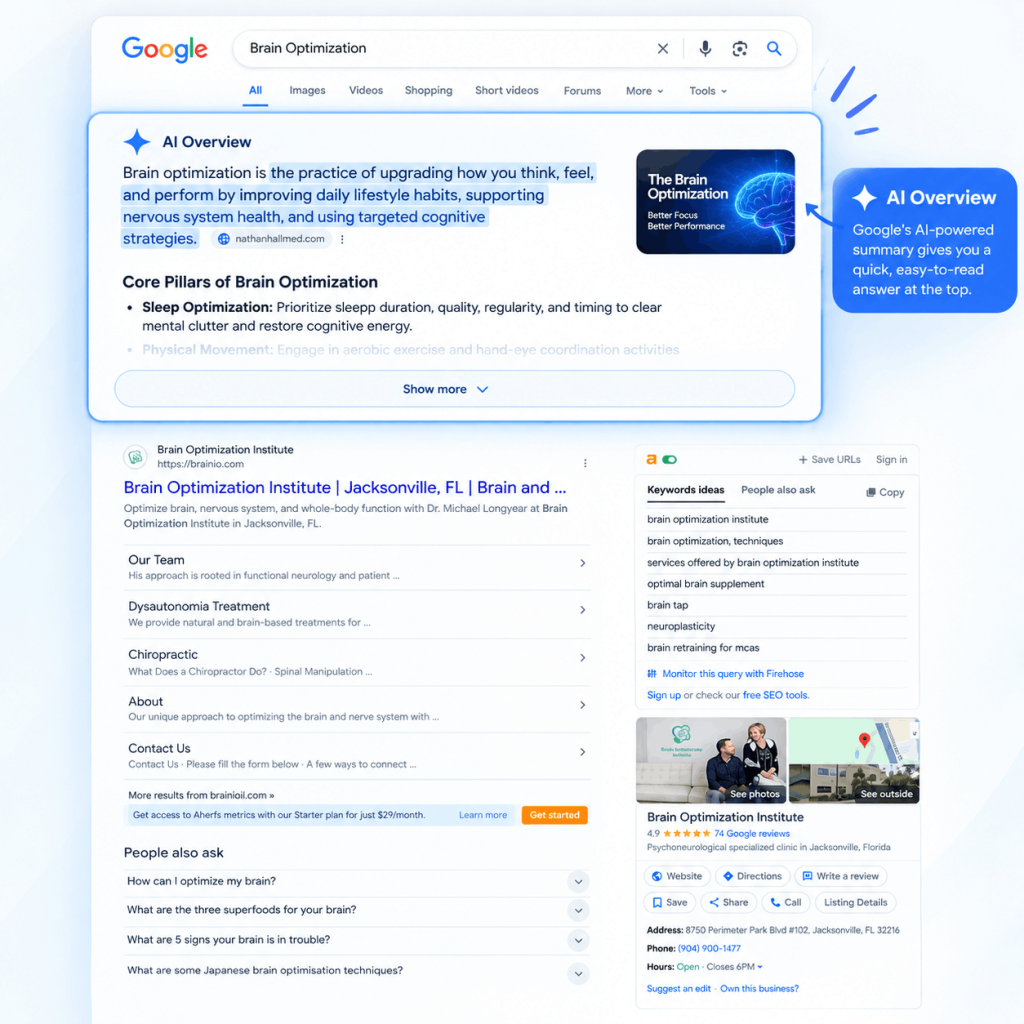
AI answers now sit on top of many results, so it is fair to ask whether classic ranking factors still apply. The safe answer is yes. Pages that appear in AI features still need to be crawlable, indexed, and judged useful, so the foundations above come first.
On top of that foundation, structure matters: direct answers, clear definitions, and well-labeled sections make your content easier to pull into an AI summary. Our guide on how to optimize for Google AI Overviews gives a practical playbook, and SEO vs AEO vs GEO explains how the three approaches overlap.
Ranking factor myths to drop
Keyword density. No ideal percentage exists. Use the main term where it fits naturally, plus the related terms people actually use.
Word count. Google does not reward long pages for being long. A thorough page wins because it answers the question well.
Meta keywords. Google ignores them. Spend the time on a clear title and a useful description instead.
Freshness for its own sake. Updating a date without improving the page changes nothing. Refresh content when the facts change.
A simple priority order for 2026
- Match search intent before you write.
- Publish original, experience-based content that beats what already ranks.
- Show trust with real authors, sources, and accurate claims.
- Fix crawling, indexing, mobile, and Core Web Vitals problems.
- Earn links naturally and avoid anything that looks like a scheme.
- Track Search Console against confirmed update dates, not rumors.
FAQ
-
How does Google rank websites?
Google crawls and indexes pages, then uses automated ranking systems to score them against a query. Those systems weigh relevance, content quality, trust signals, links, and page experience, with search intent guiding what counts as the best match.
-
What affects SEO rankings the most?
Search intent match and content quality come first. Links, technical health, and trust signals then decide how well a page competes against similar results.
-
What changed with the Google algorithm update in 2026?
Google confirmed a Discover core update in February, core updates in March and May, and spam updates in March, June, and August. The core updates re-evaluated quality broadly rather than targeting one type of site.